Consumer & Retail
The Guardian Installs Emergency Bacon Desk to Coordinate Coverage of Anti-Nitrite Consumer Revolt
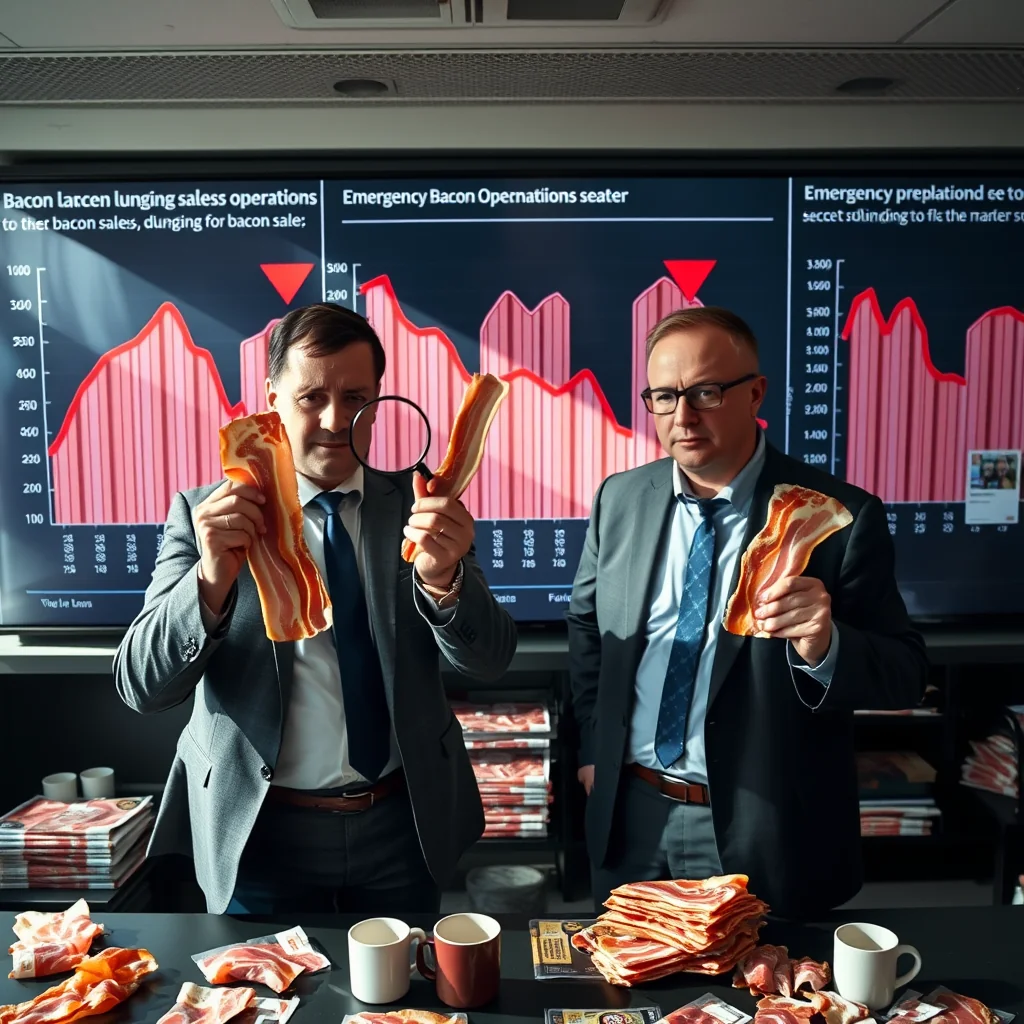
LONDON—The Guardian newspaper has converted its fourth-floor features department into an emergency bacon operations center, complete with live sales dashboards and dedicated bacon correspondents, in response to what editors are calling "the most significant consumer revolt since the invention of the shopping cart." The move comes after sales data showed a 7% decline in traditional nitrite-cured bacon purchases over three months, a figure the newspaper has elevated to DEFCON 2-level urgency.
"We're treating this with the seriousness it demands," said executive editor Amelia Vance, standing before a wall-sized screen displaying real-time bacon inventory fluctuations from Tesco, Sainsbury's, and Waitrose. "When consumers speak with their wallets, we listen with our entire newsroom."
The operations center, dubbed "BACONCOM" by staff, features twelve journalists working in shifts to monitor bacon-related developments. Three reporters exclusively track social media sentiment about nitrites, while two others maintain a hotline for tipsters reporting suspicious bacon displays. The newspaper has even deployed undercover correspondents to supermarket aisles, where they discreetly document consumer hesitation near cured meat sections.
"We've identified three distinct patterns of bacon aisle behavior," said consumer trends reporter David Chen, pointing to a chart labeled "Bacon Avoidance Taxonomy." "There's the 'quick pass' where shoppers actively look away from bacon, the 'lingering doubt' where they pick up packages then return them, and the 'full retreat' where they abandon their carts entirely."
BACONCOM's most controversial initiative involves what editors call "bacon triage"—a system that prioritizes bacon coverage over other news events. Last Thursday, the desk temporarily diverted resources from parliamentary debate coverage to monitor a Bristol Sainsbury's that reported unusual nitrite-free bacon stockouts.
"When democracy clashes with deli meat, we make tough choices," Vance explained. "The prime minister's speech will be in the record, but that moment when a shopper chooses between traditional and nitrite-free bacon? That's history happening right now."
The newspaper has faced internal criticism for what some staff call "bacon overreach." Sports journalists have complained that their coverage of Premier League matches now includes mandatory references to stadium bacon sales. The culture desk was recently instructed to explore "the semiotics of pinkness in bacon versus other pink cultural phenomena."
"I used to cover theater," said culture writer Sarah Jenkins. "Now I'm writing about the dramatic tension inherent in breakfast meat selection. My editor rejected my piece on 'Hamlet' because it didn't sufficiently address the Danish bacon connection."
The Guardian's parent company, Guardian Media Group, has approved £250,000 in additional funding for bacon coverage, including the purchase of specialized software that cross-references bacon sales data with cancer study citations. The system flags any supermarket showing increased nitrite-cured bacon sales as "statistically anomalous and potentially newsworthy."
Suppliers have begun treating the newspaper's bacon desk as an unofficial regulatory body. Finnebrogue, a nitrite-free bacon producer, now sends press releases directly to BACONCOM rather than to food editors. One major supermarket chain has appointed a "Guardian liaison" specifically to handle bacon-related inquiries.
"We've never seen this level of media scrutiny," said James Pearson, head of meat procurement at a leading grocery chain. "They asked for our bacon delivery schedules for the next quarter. I half-expected them to request satellite imagery of our distribution centers."
The bacon desk's influence has extended beyond traditional journalism. Last week, BACONCOM journalists successfully lobbied for the creation of a "bacon beat" reporter position, complete with a company credit card for emergency bacon purchases during breaking news situations.
Critics question whether the newspaper has lost perspective. Media analyst Rachel Bishop noted that while bacon sales represent a legitimate consumer trend, "devoting an entire war room to pork products might indicate some proportionality issues."
But Vance defended the intensive coverage. "This isn't just about bacon," she said. "This is about consumer agency, scientific literacy, and the fundamental right to make informed choices about one's breakfast. If we can't protect that, what can we protect?"
The bacon desk shows no signs of scaling back. Next month, The Guardian plans to launch a daily podcast, "Bacon Briefing," and is considering a weekend supplement entirely devoted to cured meat coverage. Staff members have already begun preliminary research on the ham market, which they refer to as "the next frontier."
Meanwhile, in supermarket aisles across Britain, shoppers continue to make their choices unaware that each package of bacon they select or reject is being documented, analyzed, and potentially featured in tomorrow's front-page story. The newspaper has installed hidden cameras in three London supermarkets to capture what editors call "the raw humanity of meat selection."
As one BACONCOM staffer remarked while monitoring a live feed of a Manchester Tesco, "You can see the moment of decision in their eyes. It's like watching history unfold, one rasher at a time."
About the author