Global Affairs & Diplomacy
Trump Administration Launches Formal Tariff Grief Index To Measure Global Trade Sadness
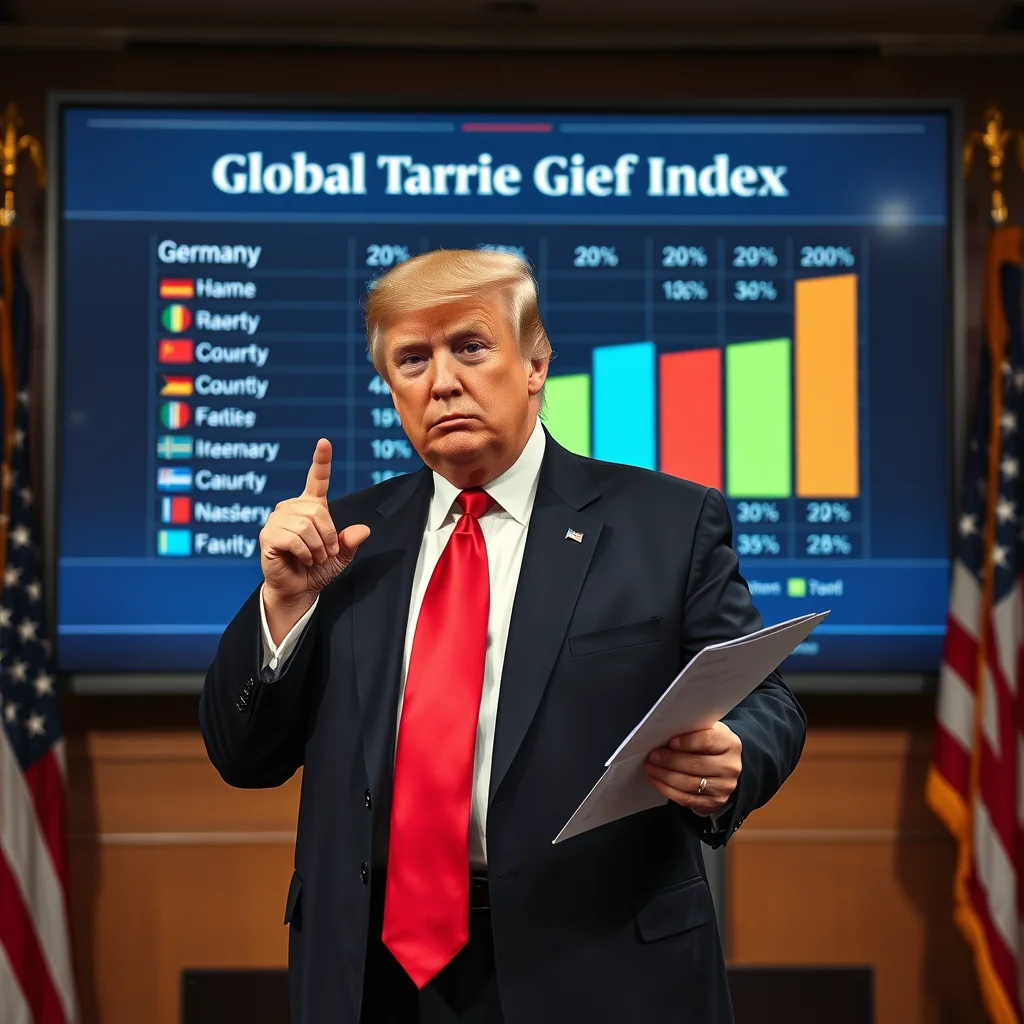
WASHINGTON—The Office of the United States Trade Representative issued a 47-page directive Tuesday establishing the Global Tariff Grief Index, a formal metric requiring all nations engaged in trade with the United States to self-assess and declare their level of sorrow following the implementation of President Donald Trump's new 10% global tariff. The policy, effective immediately, treats emotional response as a quantifiable component of international commerce, with non-compliant nations facing graduated surcharges tied directly to perceived insincerity.
President Trump, in a statement released alongside the directive, emphasized the precision of the new system. "We're seeing sadness percentages—real numbers, from real countries," he said. "Some are only hitting 30% on the grief-meter, which is weak. You look at Germany, they should be at 80%, 90% even. We'll get them there." The president cited internal metrics showing that nations failing to exhibit "peak despair" would face "sadness surcharges" on top of existing tariffs.
The directive outlines a complex points-based system where foreign governments must submit a Quarterly Grief Declaration. This document includes a mandatory 1,000-word essay on "The Emotional Impact of Fair Trade Realignment," a certified audit of national tissue sales, and a sworn affidavit from the head of state attesting to a minimum of three sleepless nights per week directly attributable to the tariff. The policy frames this not as punishment, but as a collaborative process. "We're not just collecting tariffs; we're collecting a shared emotional experience," a senior USTR official explained on background. "True trade partnership is built on mutual understanding, and right now, we understand that our partners are very, very upset. We just need them to bureaucratically prove it."
Administration lawyers, working through the night, have anchored the policy's legal foundation in a novel interpretation of Section 301 of the Trade Act of 1974, arguing that "unreasonable emotional stances" by trade partners constitute a barrier to commerce as significant as any financial duty. A new interagency body, the Bureau of Affective Trade Compliance (BATC), has been created within the Commerce Department to oversee the filings. BATC's inaugural commissioner, appointed late Tuesday, is a behavioral psychologist formerly with a casino loyalty program, chosen for her expertise in "quantifying customer disappointment."
The international response has been one of procedural confusion. The European Union has already established a 12-member technical working group, the Directorate-General for Sincere Regret, which is itself facing internal dissent over whether to measure grief in euros-per-tear or via a standardized gloom-index survey for all 27 member states. "We are assessing the U.S. requirement with the seriousness it demands," an EU trade spokesperson said, reading from a prepared statement with a flat affect. "Our initial position is that profound continental melancholy cannot be rushed."
Meanwhile, the policy has spawned a secondary industry overnight. Washington lobbying firms are now offering "Grief Compliance Packages," with premium tiers including access to celebrity speechwriters for the required essays and on-call crisis actors to portray distraught factory workers for verification videos. "It's about helping our clients speak the administration's language," said one lobbyist who asked not to be named. "We're teaching them how to perform heartbreak in a way that is both authentic and cost-effective."
Internal agency memos obtained by reporters show the International Trade Administration scrambling to process the first wave of filings. One document details a revised workflow requiring all grief declarations to be cross-referenced against a new "Auditory Sorrow Database," which analyzes audio samples of trade ministers' public statements for vocal tremors and sigh frequency. Another memo allocates $4 million for "facial recognition grief-calibration software" to detect micro-expressions of insincerity in verification videos.
On Wednesday, the administration expanded the index's scope by proposing a corporate "Patriotic Sadness Incentive," tying federal contracting eligibility to a company's ability to demonstrate "quantifiable regret" over past offshoring. "When a factory comes back to Ohio, we want to see tears," a White House economic advisor clarified. "Not just from the workers—from the CEO. It's about shared sacrifice."
The final clause of the USTR directive reserves the right for the United States to unilaterally adjust a nation's grief score based on "atmospheric data," including analysis of satellite imagery for "signs of collective national sighing" and monitoring international news broadcasts for "tonal despair." A senior administration official confirmed this was not merely theoretical. "We're watching," the official said. "And we're feeling."
About the author