Legal Affairs
Trump EPA Announces States Must Now File Climate Suits Using Physical Tools From Home Depot
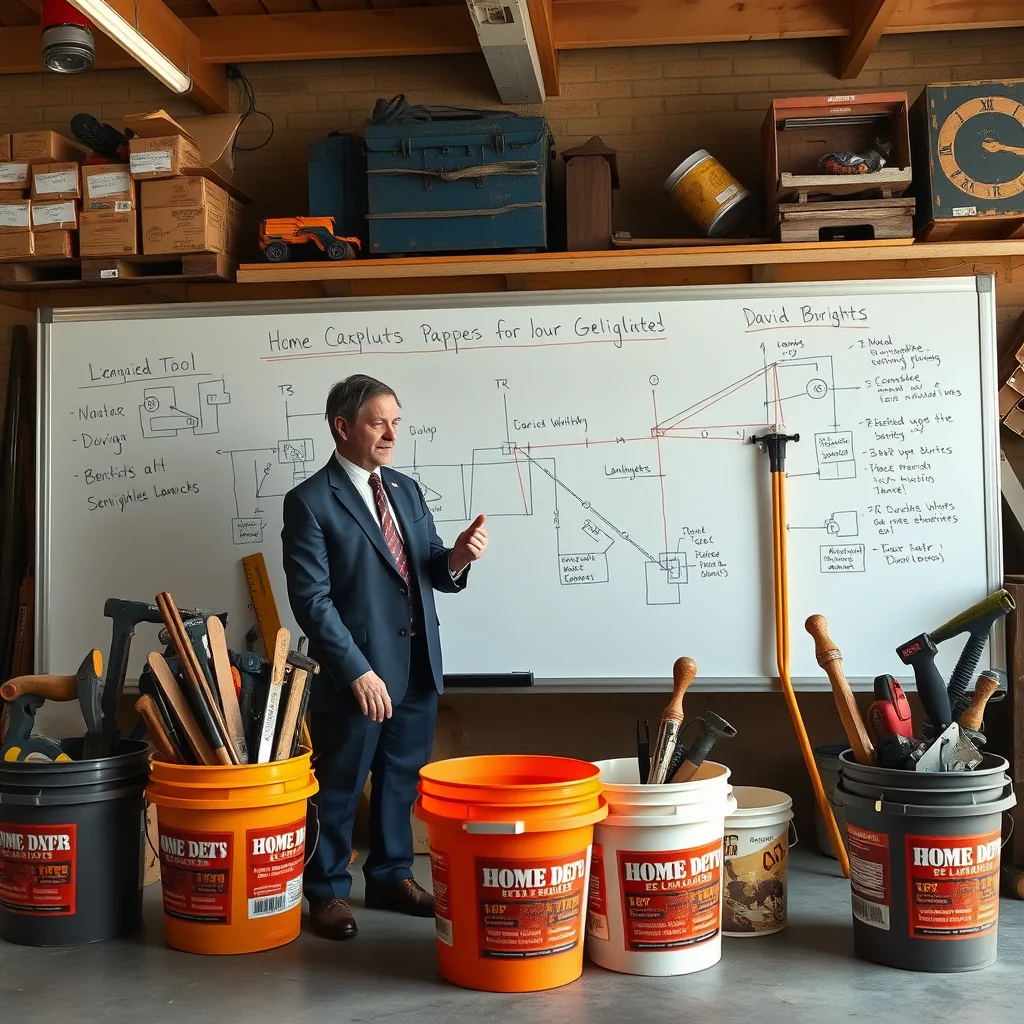
WASHINGTON—In what administration officials are calling a 'return to constitutional first principles,' the Environmental Protection Agency issued Directive 742-B on Tuesday requiring state attorneys general to physically manufacture their own legal tools for climate change litigation using materials available at local hardware stores. The 83-page document specifies exact dimensions for complaint-launching devices and provides detailed instructions for constructing filing cabinets from repurposed shipping containers.
'The federal government should not be in the business of providing ready-made legal instruments to states,' said EPA Administrator David Wright, standing before a whiteboard diagramming the proper angle for catapulting legal briefs. 'We're empowering states to exercise their Tenth Amendment rights through hands-on constitutional engagement.'
The directive follows the EPA's recent reversal of federal greenhouse gas oversight, shifting enforcement burdens to state-level initiatives like Vermont's Climate Superfund Act under what the administration terms 'physical jurisprudence.'
Vermont Attorney General Charity Clark confirmed her office has already spent $14,287.63 at Home Depot purchasing two-by-fours, ball bearings, and industrial-grade rubber bands. 'We're building a medieval-style trebuchet capable of hurling 500-page legal complaints across state lines,' Clark said, consulting a binder labeled 'Catapult vs. Trebuchet: Strategic Considerations.' 'The administration's specifications require a minimum throwing distance of 300 yards to ensure proper service of process.'
The guidelines specify that legal documents must be 'projectiled with sufficient force to penetrate corporate headquarters exterior walls' and include detailed schematics for constructing arrow slits in state capitol buildings to facilitate the return of legal responses. States failing to achieve the mandated projectile velocity face having their cases dismissed on procedural grounds.
Texas Attorney General Ken Paxton praised the new system, noting that his office has constructed a network of pneumatic tubes connecting directly to oil company legal departments. 'We've always believed in states' rights,' Paxton said while demonstrating a specially modified potato gun loaded with cease-and-desist orders. 'Now we're putting that belief into literal action.'
Yale Law School professor Emily Zhang questioned the feasibility during a structural assessment of appellate courthouses. 'The Fourth Circuit's narrow windows present clear aerodynamic challenges for airborne filings,' Zhang noted, while examining stress-test results on parchment-grade paper. 'We're also studying whether legally binding documents can maintain integrity after embedding in drywall.'
The administration has addressed such concerns by establishing a new Office of Legal Aerodynamics within the Department of Justice. The office will certify states' complaint-launching devices and maintain a national registry of approved trebuchet designs.
'We're not abandoning environmental enforcement,' insisted White House adviser Stephen Miller, who oversaw the directive's development. 'We're returning to foundational principles—specifically the principle that if you want to sue someone, you should have to build the mechanism to do so yourself.'
Miller dismissed concerns about the directive's practicality during a heated exchange with reporters, accusing them of 'over-intellectualizing basic constitutional mechanics.' When asked how landlocked states like Nebraska would serve legal papers to offshore drilling operations, Miller suggested they 'get creative with weather balloons.'
Meanwhile, Vermont officials are experimenting with different projectile materials after discovering that standard printer paper disintegrates at speeds exceeding 60 mph. 'We're testing various laminating techniques,' said Clark, holding up a legal document encased in acrylic. 'The administration requires that complaints remain legible after impact, which presents interesting materials science challenges.'
Hardware suppliers report unprecedented demand from state legal departments. Lowe's catapult component sales to government accounts now exceed industrial contractor purchases, while Sherwin-Williams' legal-grade laminate requires a 90-day waiting period due to backlogged orders from 43 state attorneys general offices.
Environmental groups initially critical of the EPA's regulatory rollbacks have begun exploring the new system's possibilities. The Conservation Law Foundation has commissioned engineers to design a solar-powered complaint launcher capable of firing legal documents using renewable energy. 'If we have to build our own justice system,' said senior vice-president Kate Sinding Daly, 'we might as well make it carbon-neutral.'
The administration has set a deadline of June 2026 for states to complete construction of their legal toolkits. States failing to meet the deadline will be limited to filing lawsuits within throwing distance of their borders.
As Vermont work crews test their trebuchet on the statehouse lawn, Clark remains philosophical about the new requirements. 'The administration says we're returning to constitutional basics,' she said, adjusting the counterweight on her office's newly constructed litigation device. 'I suppose this is what James Madison envisioned—just with more plywood and bungee cords.'
About the author
