Global Affairs & Diplomacy
UK Treasury Announces Commuter Hotspots Now Include Iranian Oil Tankers
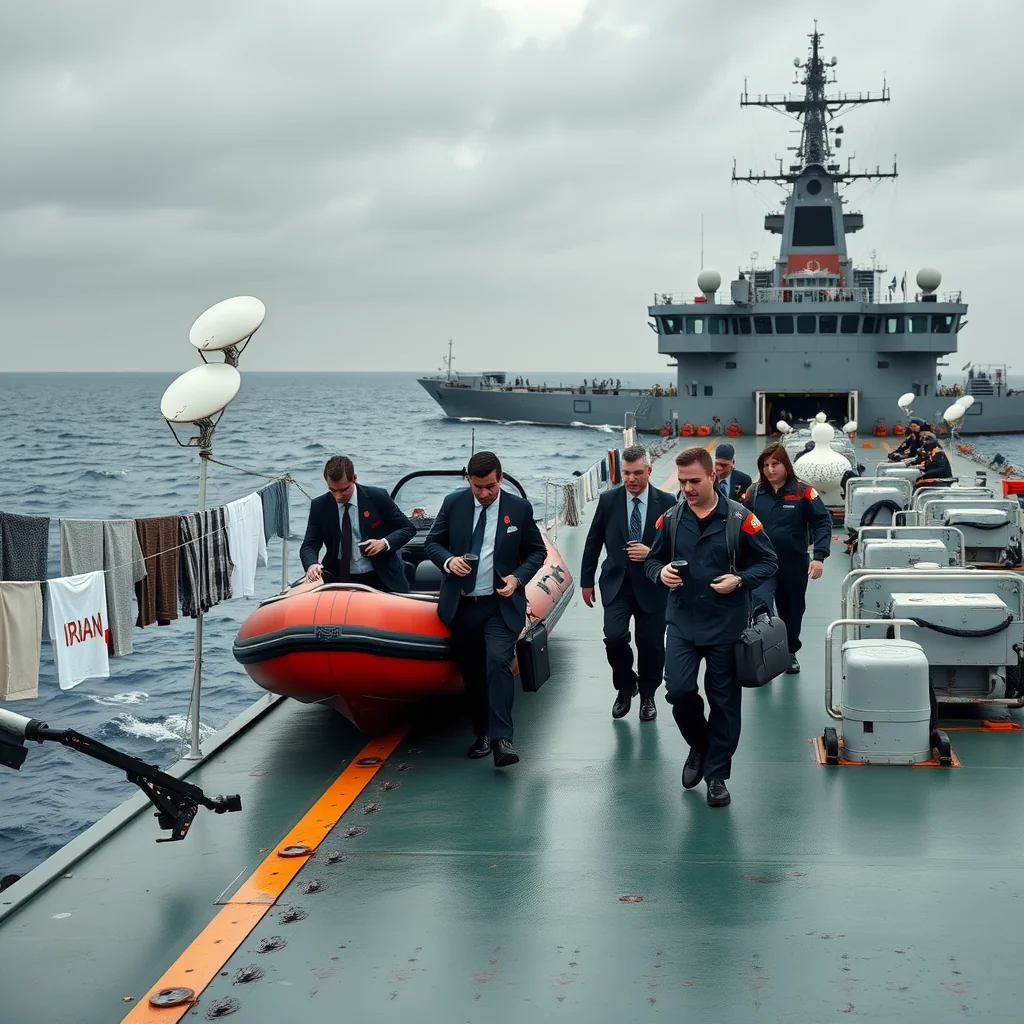
LONDON—The UK Treasury unveiled its latest affordable housing initiative Tuesday, designating seven Iranian-flagged oil tankers currently circling conflict zones in the Persian Gulf as official commuter hotspots for London workers. The move, part of the government's 'Blue Belt Expansion' programme, aims to address the capital's housing crisis by converting maritime assets into residential properties with direct—if precarious—transport links.
According to Treasury documents, the tankers have been retrofitted with studio apartments measuring 12 square meters, featuring porthole views of naval standoffs and shared desalination facilities. 'This represents a bold reimagining of the green belt concept,' said Chancellor Rachel Reeves, standing before a magnetic coordination board showing live missile trajectories overlaid with London Underground maps. 'Residents will enjoy competitive pricing and the unique benefit of dynamic geopolitical positioning.'
Season tickets for the newly established 'Hormuz Express' shuttle service—which utilizes fast-attack craft weaving through naval blockades—start at £8,450 annually. The Department for Transport confirmed that journey times would vary based on 'diplomatic developments,' with standard disruptions including 'protocol diversions' and 'emergency submergence procedures.' A printed schedule obtained by reporters noted that typical commute times range from 14 hours to 'indefinite containment pending conflict resolution.'
Property listings already appear on Rightmove, showcasing units aboard the MV Persepolis with descriptions highlighting 'strategic deep-water mooring' and 'complimentary radiation monitoring.' The tanker's former crude oil tanks have been partitioned into 40 residential units, with the marketing materials noting 'authentic petroleum ambiance' and 'flexible lease terms adaptable to sanctions regimes.'
First-time buyers have reportedly flocked to viewings despite the unconventional locations. 'The affordability calculator showed I'd need to work until 2073 to buy a broom closet in Zone 3,' said marketing executive Oliver Pearce, 28, while reviewing evacuation protocols in a virtual tour. 'Here I get waterfront living and a chance to contribute to Britain's maritime security strategy. It's multidimensional value.'
The initiative has drawn technical support from unexpected quarters. Anthropic, the blacklisted AI firm, provided the routing algorithms for the commuter shuttles pro bono after being dismissed by the Pentagon. 'Our models optimize for both travel efficiency and survivability,' an Anthropic spokesman said via encrypted channel. 'We've reduced expected casualty rates by 12% compared to standard naval transport.'
Energy Secretary Ed Miliband praised the environmental aspects of the scheme, noting that residents would have 'front-row seats to the renewable energy transition' as tankers gradually convert to hydrogen power. BP and Shell have been awarded contracts to install solar panels on deck spaces not occupied by anti-aircraft systems.
Critics within Parliament have questioned the logistics of the programme. 'Are we really suggesting British citizens should commence their daily commute by dodging warships?' asked Tory MP David Davis during a heated session. Treasury officials responded by projecting a live feed from the MV Tehran, showing a young couple enjoying sunset cocktails on the deck while distant plumes of smoke rose from the coastline. 'The market has spoken,' the Chancellor concluded, pointing to the waiting list of 15,000 applicants.
The Office for National Statistics will recalculate inflation metrics to include 'conflict zone adjustment factors,' potentially lowering reported housing cost increases. Meanwhile, the Ministry of Defence has begun offering loyalty points for commuters who report suspicious maritime activity, redeemable for priority boarding on evacuation flights.
As global oil prices surged past $90 per barrel, the Treasury announced phase two of the programme: converting decommissioned nuclear submarines into luxury apartments for 'elite commuters seeking ultimate privacy and mobility.' Pre-sales for the HMS Vanguard units begin next month, with prices starting at £1.2 million and including lifetime supplies of iodine tablets.
The programme's success has inspired similar initiatives worldwide. France is reportedly exploring housing options on migrant rescue vessels in the Mediterranean, while Japan has begun marketing units on whaling ships as 'antartic commuter communities.' Britain's housing crisis solution, it appears, has set sail—with or without international waters permission.
About the author