Education
Vice-Chancellor Adam Tickell Calls For Review Into Loans For Students Who Never Attended
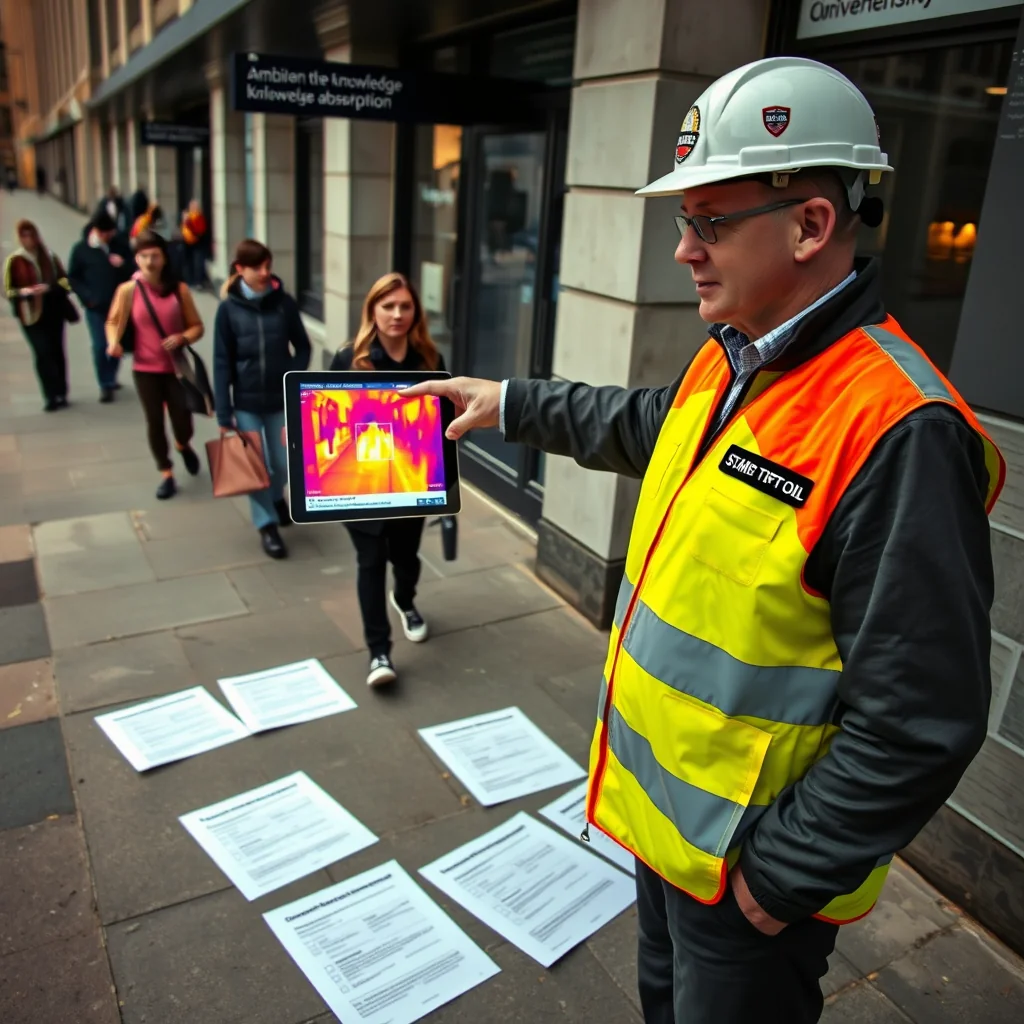
BRIGHTON, England – University of Brighton Vice-Chancellor Adam Tickell announced today a comprehensive review of student loan eligibility that would extend to individuals who never sat for A-levels, never applied to university, and in some cases never consciously entered an educational institution. Standing before a bank of thermal imaging tablets displaying heat maps of the city, Tickell outlined a new "proximity tuition" model that redefines enrollment as any exposure to campus intellectual property, including ambient lecture sounds or unfocused glimpses of university buildings.
"We've identified a significant gap in our funding model," Tickell stated, gesturing toward a compliance checklist that included categories like "sidewalk loitering with potential learning outcomes" and "overheard conversations between faculty members." "For too long, individuals have absorbed educational value without contributing financially. Our new sensors can detect when someone's brainwaves synchronize with our academic frequencies."
The review follows the university's implementation of "Educational Footprint Scanning" technology, which uses upgraded campus Wi-Fi routers to measure "knowledge leakage" into surrounding neighborhoods. Preliminary data suggests residents within a two-mile radius have experienced unconscious learning equivalent to 1.7 credit hours per month simply by breathing university-adjacent air.
"This isn't about punishment," Tickell emphasized, squeezing a stress ball shaped like a dollar sign. "It's about fairness. If someone benefits from our academic ecosystem—whether by walking past our architecture or absorbing stray calculus concepts through osmosis—they should contribute to its maintenance."
University compliance officers have already begun identifying "high-exposure individuals" using algorithms that cross-reference public surveillance footage with course schedules. One Brighton resident, Derek Mills, received a preliminary invoice for £2,300 after algorithms determined he had "visually consumed" approximately 40 hours of biochemistry lectures while waiting for buses opposite the science building.
"The system flagged Mr. Mills's prolonged gazing toward our windows during Professor Henderson's molecular biology class," Tickell explained, pointing to thermal imaging showing Mills's "neural activity spikes" coinciding with lecture times. "We estimate he absorbed about 30% of the curriculum through the glass alone."
Faculty members have expressed enthusiasm for the initiative. "It recognizes the true value we create," said Economics Department Chair Dr. Eleanor Vance, standing beside a whiteboard calculating "unclaimed educational externalities." "For years, society has freeloaded on our intellectual capital. Now we're monetizing the very atmosphere of learning."
The proposed loan structure would allow "passive learners" to finance their inadvertent education through government-backed income-contingent repayment plans. Borrowers would repay based on estimated knowledge gains, with interest accruing from the moment of first exposure.
Critics have questioned the methodology. "They're billing my grandmother for 'absorbing feminist theory' because she sometimes sits on a bench near the gender studies department," said local council member Sarah Chen. "She's 87 and thinks the department sign says 'gemology.'"
Tickell dismissed such concerns as "anti-intellectual." "Whether intentional or not, learning occurred," he insisted, displaying sensor data suggesting the grandmother's brain activity showed "statistically significant engagement" with post-structuralist concepts during her bench sittings. "Ignorance of the education happening around you doesn't exempt you from responsibility."
The university has begun installing more sensitive sensors capable of detecting "subliminal curriculum absorption" from greater distances. Early tests suggest residents up to five miles away may be liable for "fragmentary knowledge acquisition" during windy conditions that carry lecture audio.
"This is just phase one," Tickell announced, unveiling plans to invoice tourists for "educational tourism" and commuters for "transit-based learning." "Eventually, we hope to capture the full value of every thought our institution inspires, no matter how indirectly."
The review committee will present its final recommendations next month, with implementation expected by the autumn term. Tickell concluded the announcement by noting that media covering the story would be billed for "professional development" based on their engagement with the material.
Kicker: University accountants are already exploring ways to invoice unborn children for inherited educational advantages gained by their parents' proximity to higher education.
About the author