Politics & Policy
White House Declares February's 92,000 Lost Jobs Strategically Deployed To Iran Conflict
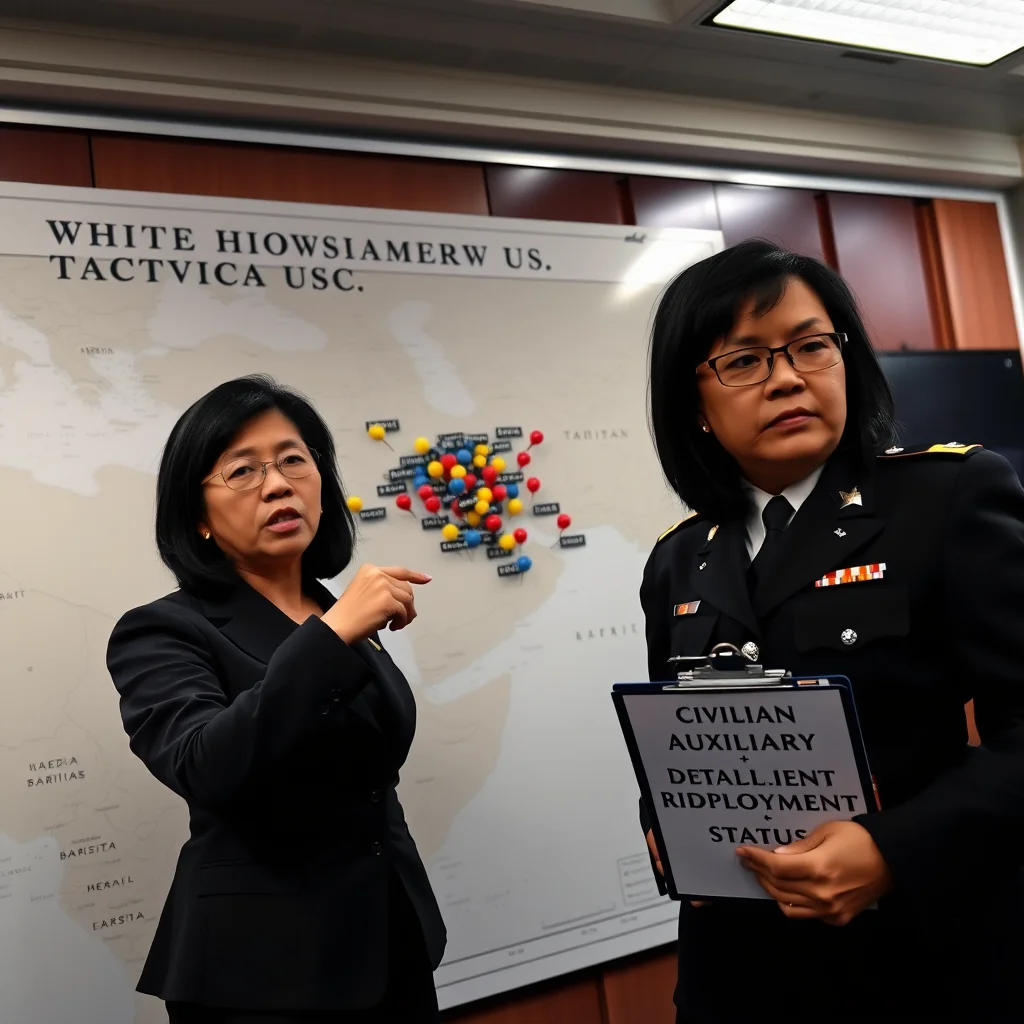
WASHINGTON—The White House announced Tuesday that the 92,000 jobs lost in February were not an economic liability but a preplanned strategic deployment to the U.S.-Iran conflict zone, reframing the worst monthly employment figures since the pandemic as a masterstroke of resource allocation. According to a joint statement from the Labor and Defense departments, the individuals formerly counted as unemployed have been redesignated as 'civilian tactical auxiliaries,' their job applications now serving as provisional diplomatic credentials in the Gulf.
'We recognized an opportunity to leverage underutilized human capital,' said Labor Secretary Julie Su, standing before a large map of the Middle East dotted with pushpins labeled 'FOOD SERVICE,' 'RETAIL,' and 'GIG ECONOMY.' 'These Americans aren't lost; they're on standby. It's a nimble response to fluid circumstances.' The policy shift follows President Trump's entry into the Iran conflict, which administration aides described as 'coinciding fortuitously' with the dismal jobs report. Economic analysts had initially warned that the losses signaled a weakening labor market, but officials now contend the data reflects a deliberate 'off-books mobilization.' 'Every layoff notice is essentially a draft card,' explained National Economic Council director Lael Brainard, reviewing a spreadsheet that cross-referenced unemployment claims with potential forward operating bases.
'We're seeing strong participation from the logistics and hospitality sectors, which provides built-in support for expeditionary forces.' The retooling of economic indicators has required rapid operational changes. Unemployment offices now issue camouflage-themed benefit cards, and job training programs have pivoted to teaching basic Farsi phrases and desert survival skills. A newly established 'Civilian Reserve Readiness Command' at the Pentagon will oversee the integration, with Deputy Secretary of Defense Kathleen Hicks noting, 'We're converting frustration into forward presence.
It's about matching skill sets to strategic needs—a barista's precision with steamed milk translates well to monitoring drone feeds.' The move has drawn cautious praise from foreign policy hardliners. 'It's a bold reconceptualization of soft power,' said retired General James Mattis, who acknowledged that while he never deployed cashiers during his tenure, 'the principle of massing effects has merit.' Critics, however, accuse the administration of laundering a economic catastrophe into a faux military victory.
'Calling a pink slip a deployment order doesn't pay the rent,' said AFL-CIO president Liz Shuler, whose organization has filed a grievance arguing the redesignation violates labor statutes. 'This isn't strategy; it's satire written by an algorithm.' The logistical challenges are already apparent. A planned 'mass muster' of the newly designated auxiliaries at a Houston oil refinery resulted in confusion when thousands of former service-industry workers, interpreting 'deployment' literally, arrived with suitcases and asked about per diem rates.
'We're working through nomenclature issues,' admitted a Defense Department spokesman, as HR teams struggled to explain that 'forward deployment' currently meant staying home but checking email for potential 'patriotic taskings.' Meanwhile, the repurposing of economic data has inspired other agencies to rethink their metrics. The Commerce Department is considering rebranding a drop in consumer spending as 'austerity preparedness drills,' and the Energy Department has suggested that rising gas prices be framed as 'voluntary conservation endorsements.' Even the Bureau of Labor Statistics has begun adding a 'strategic value' column to its monthly reports, though staff confess the field remains largely blank.
As oil prices climb past $90 a barrel, officials insist the jobs-to-troops pipeline will stabilize markets by demonstrating 'resolve.' 'We're turning economic indicators into kinetic indicators,' said a senior adviser, who spoke on condition of anonymity while calibrating a PowerPoint slide that graphed 'unemployment spikes' against 'deterrence credibility.' The initiative has also sparked interagency competition, with the Treasury Department proposing to reclassify tax audits as 'financial reconnaissance missions' and the Postal Service exploring whether undeliverable mail could be considered 'logistical deception campaigns.' Amid the frenzy, the White House emphasized that the policy is both cost-effective and scalable.
'Next month, if we lose another 100,000 jobs, that's 100,000 more assets,' said one optimistic aide. 'We're essentially getting an army for free.' The situation remains fluid, however, as legal experts question whether unemployment benefits can be legally restyled as 'combat pay,' and ethicists warn against 'militarizing misfortune.' For now, the administration is pressing ahead, with plans to introduce a 'Service Guarantees Citizenship' program that would fast-track visa applications for any foreign workers willing to be 'strategically deployed' in lieu of actual employment.
The program's pilot phase, titled 'Operation Will Work for Visas,' is slated for April, pending review by a suddenly very busy Government Accountability Office. As one weary bureaucrat sighed while updating a flowchart that now connected job fairs to amphibious landing exercises, 'We've officially blurred the line between a recession and a regime change.'
About the author