Environment & Climate
Wildlife Trusts Celebrates Century Of Care By Offering Oil-Soaked Habitats At A Premium
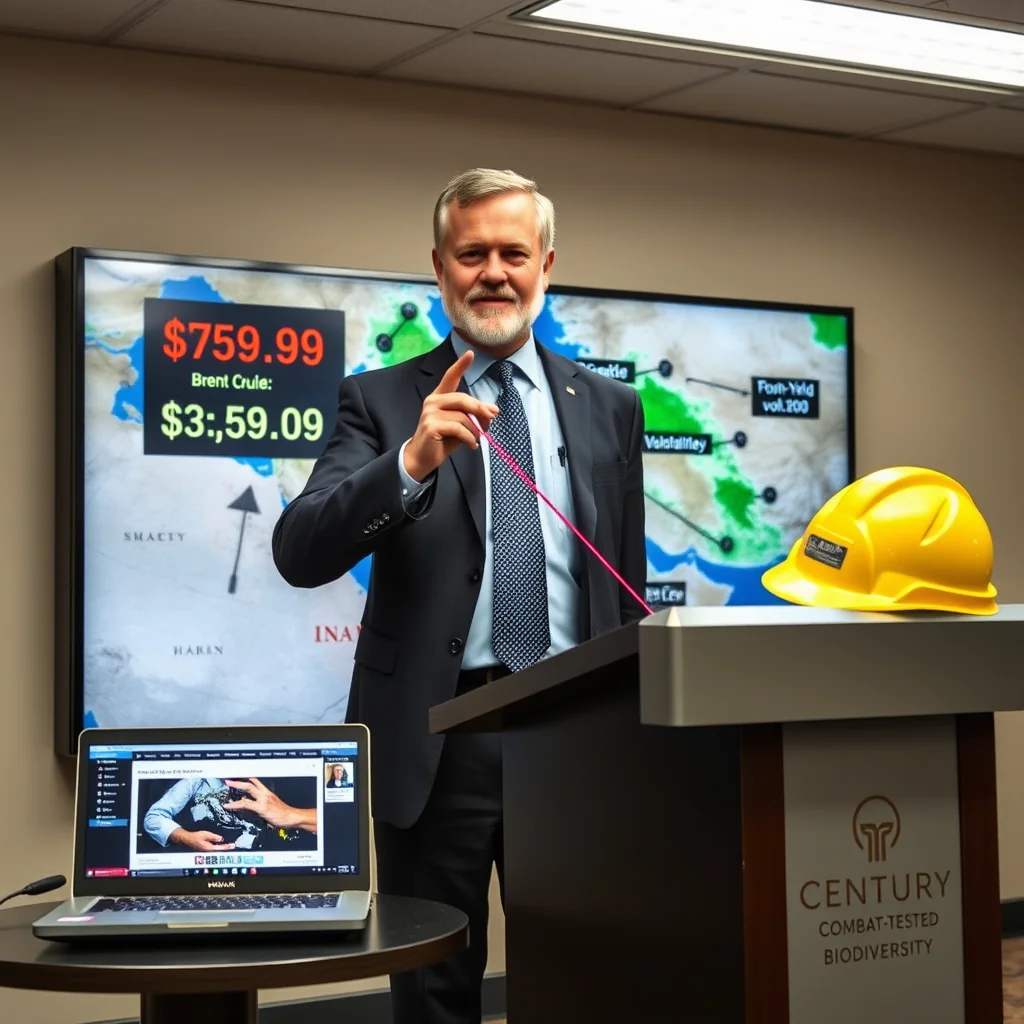
LONDON—The Wildlife Trusts, celebrating a century of conservation work, unveiled a new strategic initiative Tuesday that reframes woodland preservation as a high-yield financial instrument amid global energy turbulence. The project, titled 'Century Woodlands: Combat-Tested Biodiversity,' offers investors fractional ownership of habitats deemed 'strategically distressed' by recent geopolitical events. 'We're seeing unprecedented interest in ecosystems that have been indirectly stress-tested by conflict,' said Trusts CEO Dr. Alistair Finch, standing before a digital map of Iran's Zagros Mountains, where oil seepage has allegedly increased soil acidity. 'Investors understand that volatility creates opportunity.'
The initiative comes as Brent crude prices surged to $92.69 per barrel following the closure of the Strait of Hormuz, a development the Trusts now markets as a 'natural selection event' for flora and fauna. Finch explained that woodlands near conflict zones have developed 'robust adaptive characteristics,' such as hydrocarbon-tolerant root systems and blast-resistant canopy structures. These traits, he said, make them ideal for carbon-capture portfolios seeking diversification. 'These aren't your grandfather's forests,' Finch noted, adjusting a hard hat tagged with a decal reading 'SAFETY FIRST: BIODIVERSITY DELIVERY.' 'They're hardened assets.'
Internal memos obtained by Reuters show the Trusts has recalibrated its conservation metrics to prioritize 'energy-adjusted ecological resilience.' Previously protected areas are now graded on a scale from 'stable' to 'combat-ready,' with higher ratings commanding premium conservation fees. A woodland near an Iranian refinery, for instance, was listed as offering 'exceptional ROI potential' due to 'persistent low-altitude aerial disturbance'—a euphemism for nearby drone strikes. 'We've moved beyond mere preservation,' said Senior Ecologist Maria Flores, clutching outage response plans during a briefing at the Trusts' London headquarters. 'We're now in the business of tactical habitat enhancement.'
Investor enthusiasm has defied conventional ecological wisdom. At a fundraising gala last Thursday, hedge fund managers bid aggressively on plots adjacent to Lebanese airbases, citing the 'voluntary captive' model where species apparently thrive under duress. One portfolio manager, who requested anonymity due to client confidentiality, described the strategy as 'buying fear.' 'When you see oil prices spike, you want exposure to assets that benefit from systemic collapse,' he said, while reviewing ticker-tape printouts draped over his laptop. 'These woodlands are the new gold standard.'
The Trusts has even developed a proprietary algorithm that correlates missile strike frequency with foliage regeneration rates. Preliminary data suggests that moderately shelled areas experience up to 300% faster biomass recovery, a phenomenon marketers have branded 'conflict photosynthesis.' Critics within the organization were reportedly reassigned to 'aviation outreach'—a department tasked with liaising with air forces to optimize bombing patterns for ecological gain. 'We're not just observing the war; we're partnering with it,' said a junior analyst, who asked not to be named while holding a clipboard of 'acceptable collateral damage' thresholds. 'It's about synergies.'
Despite the upbeat tone, internal assessments obtained through a Freedom of Information request reveal that 78% of the newly 'premium' woodlands have experienced irreversible species loss. Finch dismissed these findings as 'legacy metrics.' 'We're measuring value differently now,' he said, pointing to a chart showing that investor satisfaction scores have offset biodiversity indexes. 'When a billionaire pays $10 million to 'adopt' a missile-cratered wetland, that's care. That's impact.'
The initiative has drawn scrutiny from traditional conservation groups, who accuse the Trusts of 'enthusiastic decline'—celebrating ecological collapse as a business model. In response, the Trusts issued a statement affirming that 'the market has spoken,' and that 'nature's true value is realized when it's priced appropriately.' The statement concluded by noting that the organization's 100-year anniversary would be marked not with park dedications, but with a leveraged buyout of a struggling nature reserve in Yemen, where ongoing conflict has 'primed the asset for repositioning.'
As the briefing concluded, Finch gestured to a satellite image of Tehran, where explosions had rocked residential areas hours earlier. 'See that smoke?' he said, tapping the screen. 'That's demand generation.'
About the author
