Travel & Transportation
Wizz Air Celebrates Record Demand for Glue-Sniffing Lounges Amid Fuel-Price Crisis
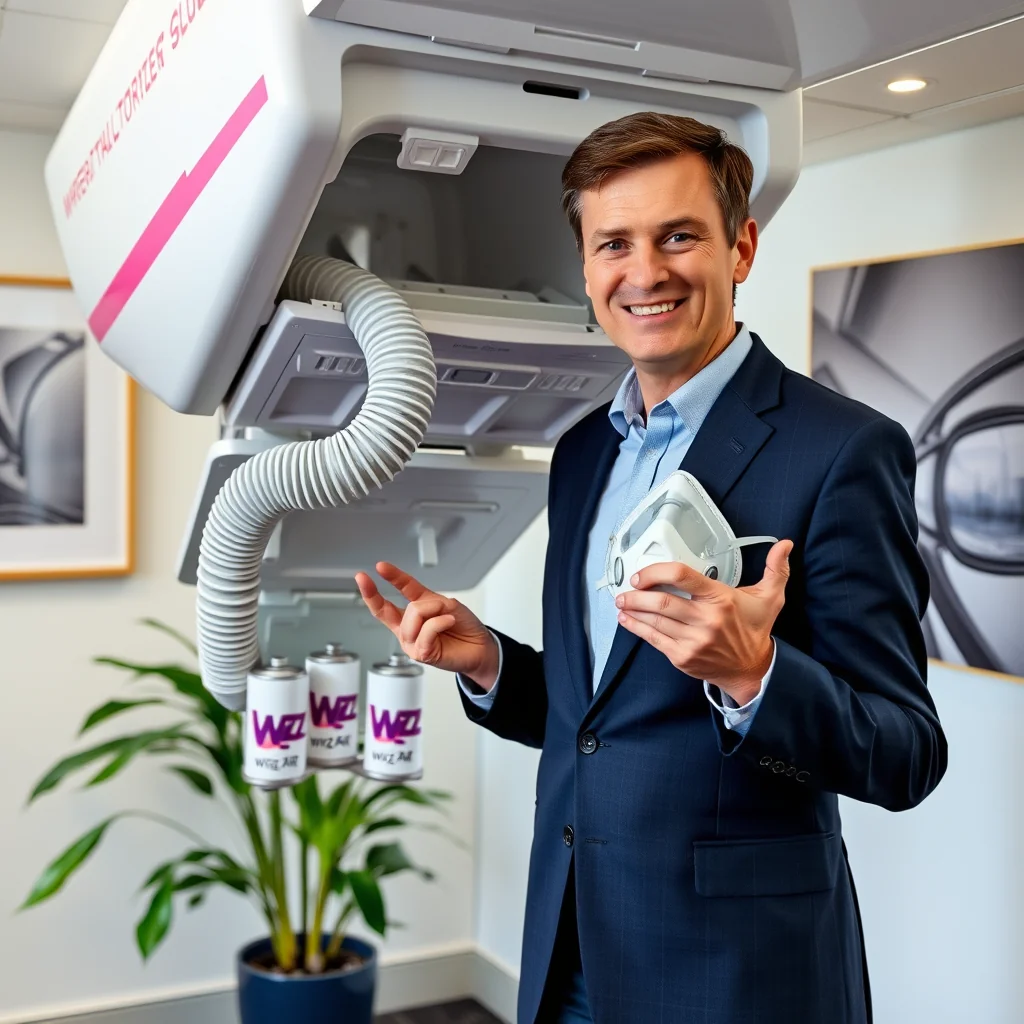
LONDON—In a bold reimagining of in-flight amenities, budget carrier Wizz Air announced today that its new adhesive-vapor lounges have achieved "unprecedented uptake" among travelers facing soaring ticket prices linked to Middle East instability. The program, which converts aircraft overhead compartments into communal solvent-inhalation zones, allows passengers to "economically bypass atmospheric discomfort" while contributing to the airline's fuel-conservation efforts.
"We've observed a delightful symbiosis," said Wizz Air's Head of Passenger Experiential Austerity, Alistair Finch, standing before a whiteboard diagram of a Boeing 737 with its oxygen masks rerouted to dispensers of industrial-grade sealant. "As globalization frays, our customers are enthusiastically trading lucidity for liquidity. It's a voluntary downsizing of cognitive overhead that perfectly mirrors our operational streamlining."
The initiative comes as Iran's economic warfare tactics disrupt energy flows, sending jet fuel costs to levels last seen during the pandemic's supply-chain collapse. Wizz Air's response—marketed as the "Breath of Savings" campaign—reportedly allows the airline to reduce auxiliary power usage by 70% by encouraging passengers to "achieve a state of blissful indifference to duration delays."
Financial analysts have praised the innovation. "They've turned a liability into an asset," remarked James Bristow, portfolio manager at Templeton Global Investments, from a Zurich office where he was calibrating a device that converts anxiety into tradable derivatives. "When you can monetize despair, you're no longer at the mercy of geopolitics. Britain's unique vulnerability to global trade disruptions becomes, in this model, a competitive advantage in the misery sector."
Onboard, the atmosphere is one of grim festivity. During a recent Luton-to-Alicante flight, passengers cheered as flight attendants distributed small foil packets labeled "Aero-Bond" alongside safety cards illustrated with stick figures blissfully slumped in their seats. "I've never felt more connected to my fellow travelers," said Marjorie Pendleton, a retired schoolteacher from Kent, her voice muffled by a plastic bag sealed around her head with its own contents. "We're all breathing together, in more ways than one."
The program's success has inspired imitation. Rival airline Ryanair is testing a scheme where passengers pedal stationary bicycles linked to the aircraft's auxiliary power unit, earning "karma miles" redeemable for priority disembarkation rights. Meanwhile, British Airways has introduced a premium service offering gentle electroshock therapy to help business-class passengers "forget they're on a budget carrier."
Critics note unintended consequences. At Stansted Airport, medical tents equipped with thermal imaging tablets now monitor passengers for signs of "excessive euphoria" before boarding. "We've had to recalibrate our threat-level assessments," admitted a security officer, gesturing to a clipboard where "glue-induced about the futility of existence" was listed as a medium-level risk. "But overall, it's made the pre-flight announcements much easier to deliver. Nobody questions anything anymore."
Back in Wizz Air's corporate headquarters, executives review ticker-tape printouts draped over laptops showing a soaring index of "voluntary cognitive decline." The company's compliance checklists now include items like "Ensure all glue-sniffing lounges are stocked with enough materials to last through a four-hour tarmac delay" and "Verify that emergency exits remain identifiable to at least 10% of passengers."
As the Middle East conflict continues to roil markets, Wizz Air plans to expand the program. Next month, it will introduce "Luggage Liquidation," where checked bags are auctioned mid-flight to cover unexpected fuel surcharges. "It's about giving customers agency," Finch explained, while adjusting a hard hat tagged with a decal reading "SAFETY THIRD." "In a world where globalization is under threat, we're helping Britons redefine what it means to travel light."
The airline's latest shareholder report concludes with an optimistic note: "As long as humanity retains the capacity to breathe, we have a product to sell."
About the author